Featured Essay · AI & Copyright
AI, Authorship, and Copyright: What Modern Authors Need to Know
8 min read
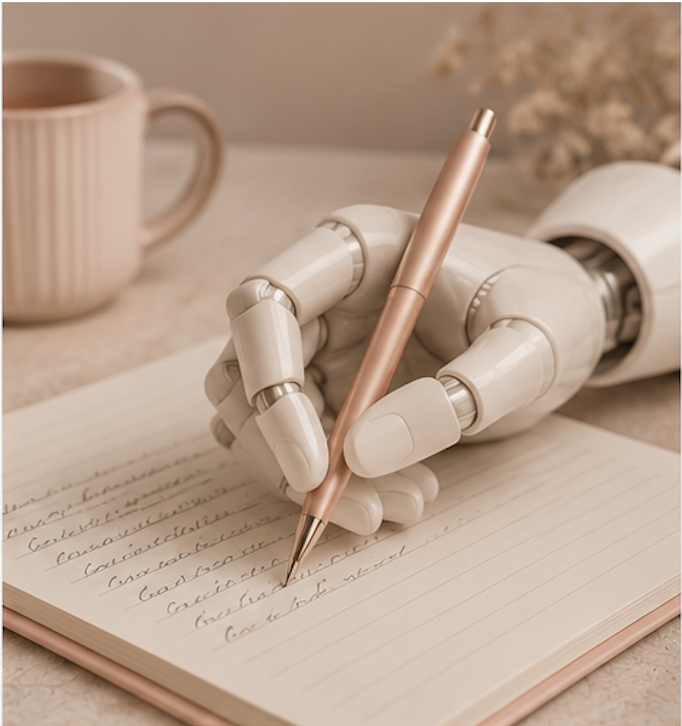
Artificial intelligence is rapidly reshaping the world — especially the publishing industry. From AI-assisted outlining tools and editing software to fully AI-generated books, authors are increasingly being forced to confront a question the law itself still does not fully have an answer to.
Who actually owns AI-generated content?
As AI becomes more prevalent within creative industries, copyright law is entering unfamiliar territory — especially for authors, publishers, and online creators whose businesses and livelihoods depend on intellectual property protection. While AI tools are advancing at an exponential rate, U.S. copyright law has surprisingly lagged behind. However, its core principle has remained consistent: copyright protection cannot exist without human authorship.
But in an era where creators are using AI to brainstorm, edit, market, and even generate entire passages of writing, this idea of human authorship has become much more complicated, and the lines between human-created content and AI-assisted content have become increasingly blurred.
The Principle of Human Authorship
Under current U.S. copyright law, works created entirely by AI generally cannot receive copyright protection. The U.S. Copyright Office has repeatedly emphasized that copyright law protects the "fruits of intellectual labor" created by human beings — not machines.
This principle became especially visible in Thaler v. Perlmutter, a major case involving an AI-generated artwork titled A Recent Entrance to Paradise. The creator attempted to register the work under copyright law while listing an AI system — not a human — as the author. Both the Copyright Office and federal courts rejected the registration, reaffirming that copyright protection requires human creative involvement.
For authors, this creates one critical distinction:
- AI-generated content is not necessarily copyrightable.
- AI-assisted content may still qualify for protection if sufficient human creativity is involved.
AI-Assisted Writing vs. AI-Generated Writing
Many authors already use AI tools in some capacity — to brainstorm titles, generate content ideas, outline, edit, summarize, or create marketing captions.
Legally, these uses are entirely different from asking AI to generate an entire novel with minimal human input. According to recent guidance from the U.S. Copyright Office, simply entering prompts into an AI system does not automatically designate someone as an author of the resulting work. Prompts alone are not sufficient to demonstrate true creative control over the final output. However, works that involve meaningful human selection, arrangement, and editing may still qualify for copyright protection — even if AI tools were used somewhere in the process.
In other words: AI can assist creativity, but it cannot legally replace authorship.
Why This Matters for Authors
For many authors, the biggest concern isn't whether AI-generated writing can be copyrighted — it's whether AI systems are already being trained on copyrighted books without permission. Several major lawsuits are currently challenging this, targeting AI companies over allegations that copyrighted books were used to train large language models. Authors, publishers, and creatives argue that AI systems may be benefiting commercially from protected creative works without licensing agreements or consent.
This raises major legal questions:
- Can AI companies legally train models on copyrighted books?
- Does this qualify as fair use?
- Can writing styles themselves be protected?
- How should authors be compensated if their work contributes to AI training systems?
Courts are still determining where the law draws the line.
Can AI Steal an Author's Style?
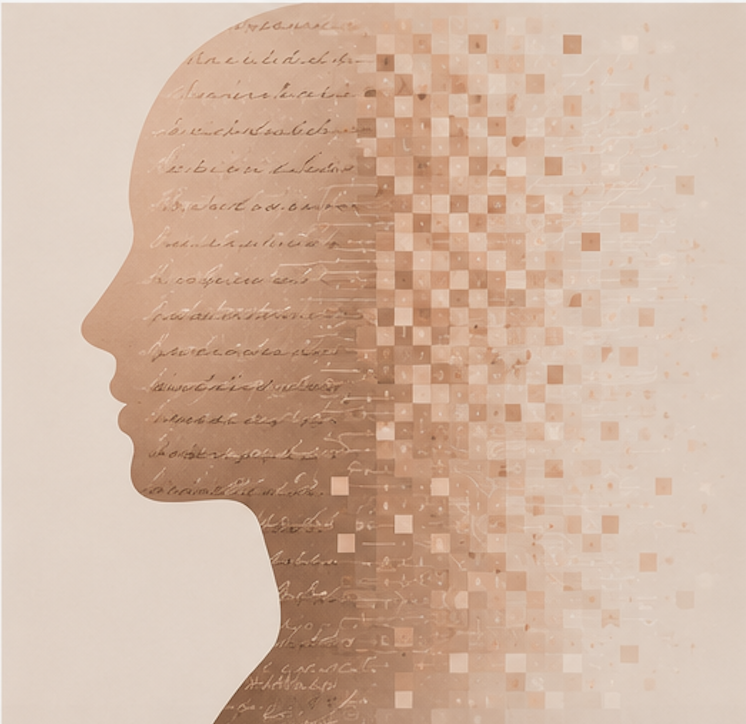
One of the most impassioned questions surrounding AI in publishing is whether AI can replicate an author's voice or writing style.
Legally, copyright law generally protects specific expressions — not broad ideas, genres, tropes, or stylistic approaches. This means that while exact copying may constitute infringement, mimicking a writing style alone may not necessarily violate copyright law.
However, as AI systems become increasingly capable of producing text that resembles specific creators, many legal scholars believe current intellectual property frameworks may struggle to keep pace with emerging technology.
For authors whose careers are built on unique voice and branding, this uncertainty creates understandable anxiety.
The Publishing Industry's AI Problem
The publishing industry now finds itself caught between innovation and protection.
On one hand, AI offers practical tools that can assist with productivity, editing, marketing, discoverability, and accessibility. On the other, it raises serious concerns about ownership, originality, compensation, transparency, and creative labor.
For indie authors especially, the issue becomes even more complicated, because many creators operate simultaneously as writers, marketers, content creators, and personal brands. This means authors aren't just protecting books anymore — they're protecting digital identities, audience relationships, and entire online businesses.
What Authors Should Be Paying Attention To
Although the law surrounding AI and copyright is still evolving, there are several areas authors should closely monitor:
1. Publishing Contracts
Future publishing agreements may begin including AI-related clauses covering disclosures, training rights, licensing permissions, and restrictions on AI use.
2. Platform Policies
Social media and self-publishing platforms are rapidly developing their own AI disclosure policies.
3. Copyright Registration Standards
The Copyright Office continues releasing updated guidance regarding AI-assisted works and registration requirements.
4. Transparency
Readers are increasingly debating whether creators should disclose AI involvement in creative works.
5. Intellectual Property Litigation
Ongoing lawsuits against AI companies could significantly reshape future copyright protections for authors and creators.
To Conclude
The legal system is still trying to catch up with technology that evolved faster than existing copyright frameworks were designed to handle. But one thing remains clear: human creativity still sits at the center of copyright protection.
For authors, this conversation is no longer theoretical. AI is already influencing publishing, marketing, discoverability, and digital branding across the industry.
The challenge moving forward will not simply be determining what AI can create — but determining how the law continues protecting the humans behind creativity itself.
Sources
- U.S. Copyright Office. "Copyright and Artificial Intelligence." https://www.copyright.gov/ai/
- U.S. Copyright Office. "Copyright Registration Guidance: Works Containing Material Generated by Artificial Intelligence." https://www.copyright.gov/ai/ai_policy_guidance.pdf
- U.S. Copyright Office. Copyright and Artificial Intelligence Part 2: Copyrightability Report. https://www.copyright.gov/ai/Copyright-and-Artificial-Intelligence-Part-2-Copyrightability-Report.pdf
- Thaler v. Perlmutter, 2023. United States District Court for the District of Columbia.
- Reuters. "US judge considers Anthropic settlement in authors lawsuit." https://www.reuters.com/legal/
- USC Intellectual Property & Technology Law Society. "AI, Copyright and the Law: The Ongoing Battle Over Intellectual Property Rights." https://sites.usc.edu/iptls/
- Jones Day. "Copyrightability of AI Outputs." https://www.jonesday.com/
- Skadden. "Appellate Court Affirms Human Authorship Requirement." https://www.skadden.com/
- Chambers. "Legal Issues with AI-Generated Content." https://chambers.com/
- Morgan Lewis. "US Supreme Court Declines to Consider Whether AI Alone Can Create Copyrighted Works." https://www.morganlewis.com/